
What to Expect

The Red Deer Pro Rodeo arrives May 21-23, 2026, bringing three days of genuine competition to Central Alberta. This isn’t theater. Riders come here to test themselves against animals and against each other. The stakes are real, the skill is evident, and the crowd feels it.

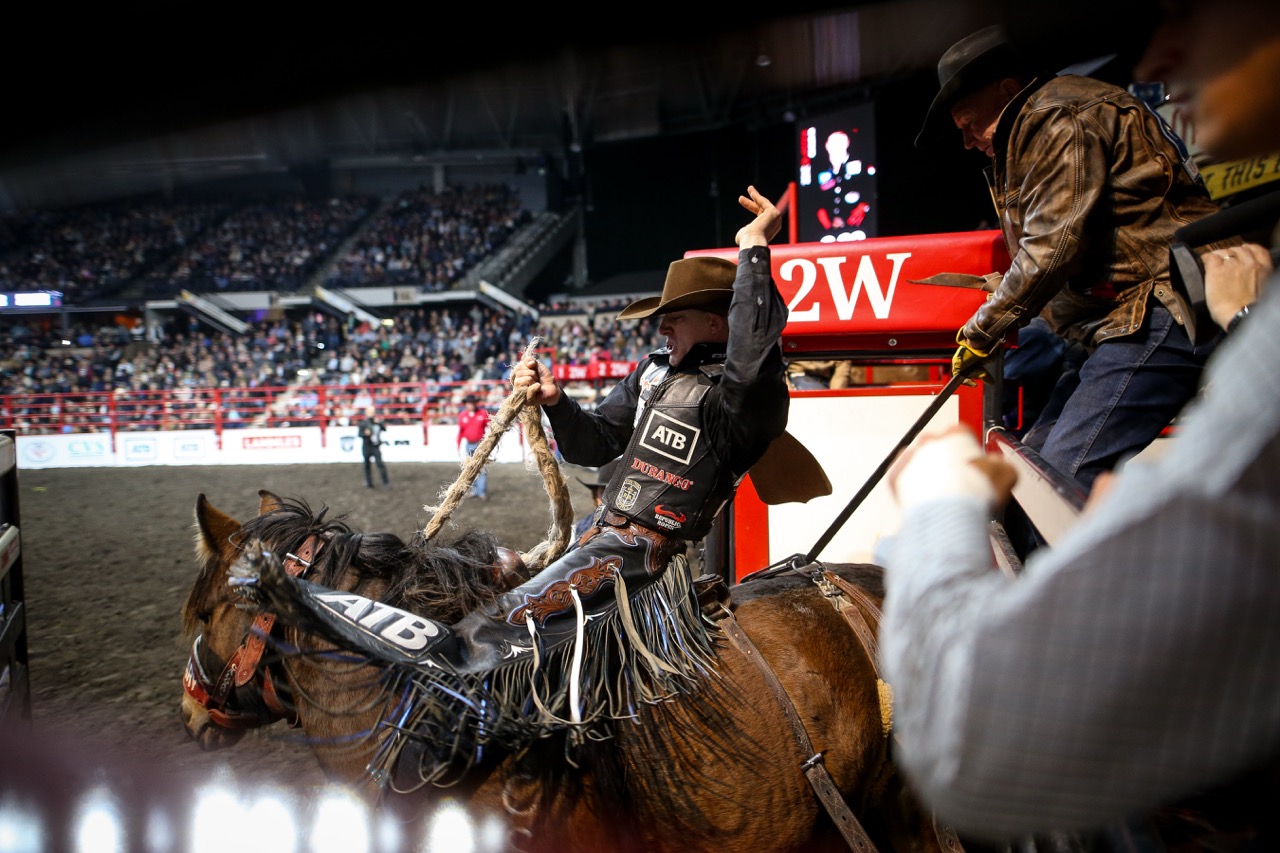
You’ll see bronc riding that demands balance and nerve. Bull riding that separates the serious from the casual. Barrel racing where fractions of seconds matter. Roping events where precision and speed combine. Steer wrestling where strength meets timing. Each event tells a story of preparation meeting opportunity.

The grounds sit ready for this. The livestock arrives healthy and strong. The arena is built for competition. The seating gives you sight lines that matter. You won’t miss what happens. Between events, there’s time to move around, grab food, talk with people who understand this world. Families settle in. Serious fans track times and scores. First-timers discover why rodeo endures in this part of the country.

We’re building something that lasts. This rodeo will run year after year, becoming part of the fabric of Red Deer and Central Alberta. You’re invited to be part of that from the beginning.

Divider Line

What the
Red Deer Pro
Rodeo brings

Three days of competition drawing riders and spectators from across the region. The event stakes are substantial, the caliber of competition is high, and the atmosphere reflects both.

$85,500

Prize Purse

350+

Competitors

8,000+

Expected Attendance

8

Rodeo Events

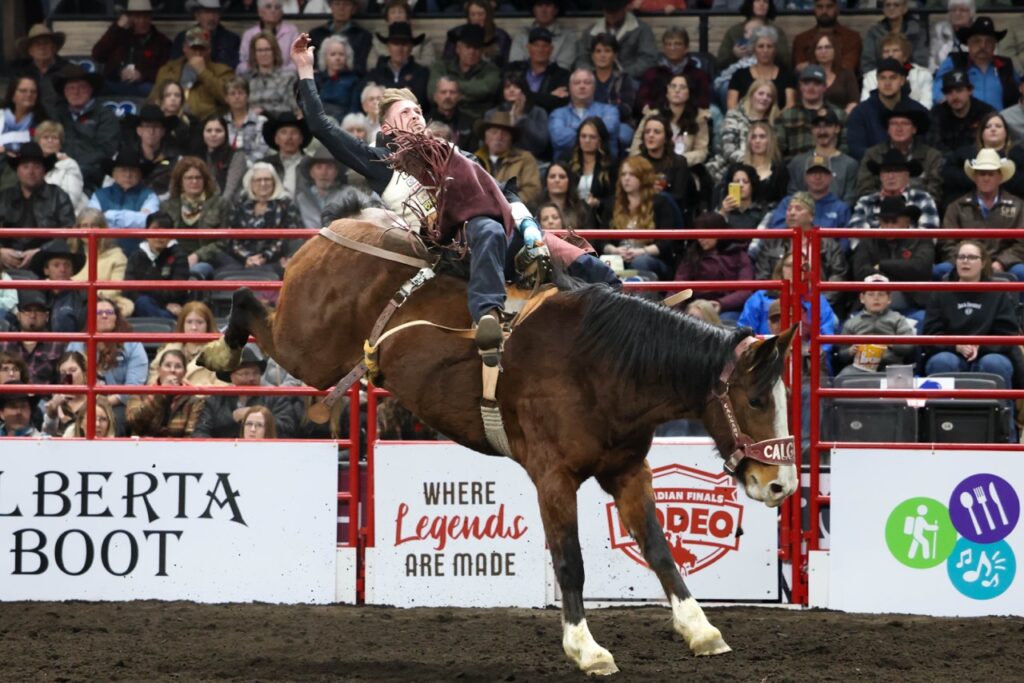
Saddle Bronc

Sponsored by: Marshall Construction Company

Often called the “Classic Event,” Saddle Bronc riding evolved directly from the ranch work of breaking wild horses. Unlike the raw power of bull riding, this event is a stylized dance of rhythm and balance. To score high, the rider must synchronize his movements with the bucking horse, spurring from the horse’s neck to the back of the saddle in a fluid, continuous motion—all while holding onto a single thick rein. It is an 8-second display of grace under pressure that demands perfect timing and grit.

What to Watch For
  • The Mark Out: The rider’s heels must be touching the animal above the shoulders the instant the gate opens. If he misses the mark, he receives a “no score.”
  • The 50/50 Split: Two judges score the ride. Half the points (50) are for the cowboy’s control and spurring action, and half (50) are for the horse’s power and agility.
  • The Score: A total score in the 80s is excellent; hitting the 90s is legendary.

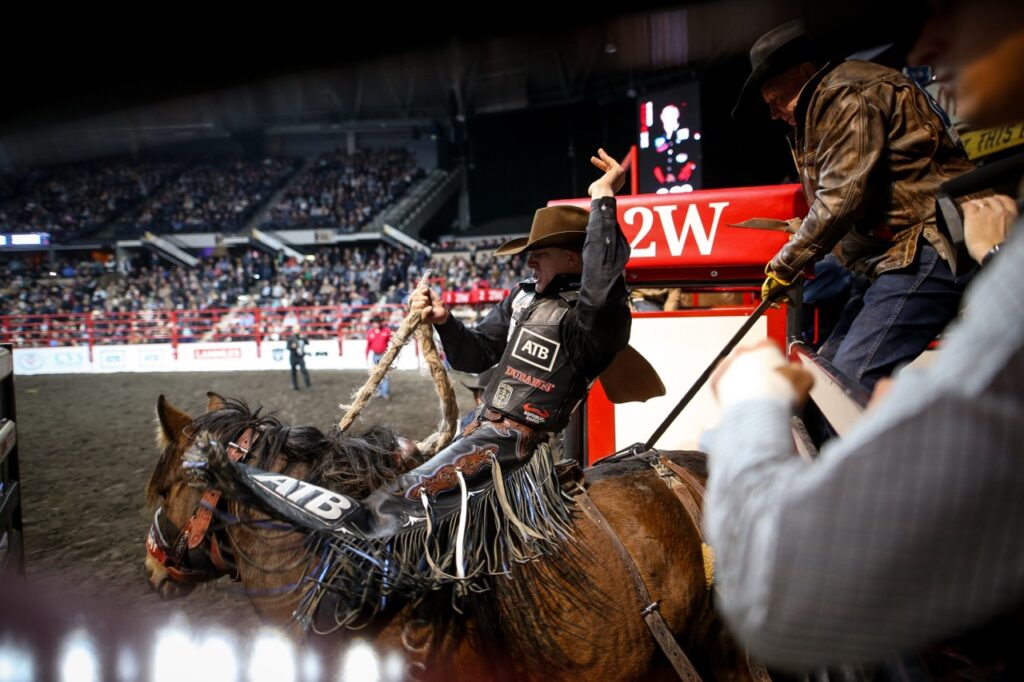
Bareback

Sponsored by: Betttensons Sand and Gravel Co. Ltd.

Bareback Riding is a high-speed collision. There is no saddle, no rein, and no room for error. The cowboy sits directly on the horse’s back, holding onto a leather “riggin” that resembles a suitcase handle. As the horse explodes out of the chute, the rider’s body is subjected to intense centrifugal force, requiring incredible core strength and specialized technique. To the fans in the Centrium, it’s a blur of flying manes and snapping heels; to the cowboy, it’s eight seconds of hanging on to one of the most powerful athletes in the world.

What to Watch For
  • The “Suitcase” Hold: The rider uses only one hand to stay aboard. Touching the horse, himself, or the equipment with his free hand results in an immediate disqualification.
  • The Spurring Motion: Watch the rider’s legs. They must stay in constant motion, throwing their feet forward toward the horse’s shoulders and snapping them back toward the riggin with every jump.
  • Pure Agility: Because there is no saddle to sit in, the rider must “flow” with the horse’s bucking motion to avoid being bucked off or injured by the sheer whip-lash effect.

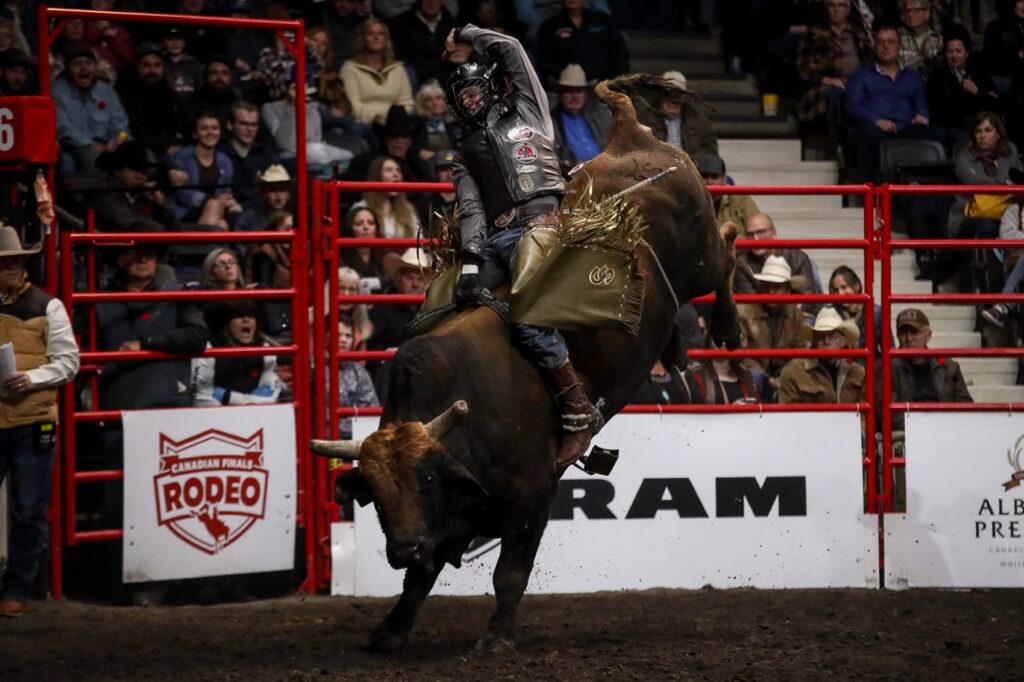
Bull Riding

Sponsored by: DaveX Construction Ltd.

The Most Dangerous Eight Seconds in Sports

Bull riding is the ultimate showdown between man and beast. It is a raw display of courage and adrenaline where a 150-pound cowboy attempts to stay aboard a 2,000-pound animal that is pure, explosive muscle. There are no style points for “grace” here; it is about survival, balance, and grit. Holding onto a flat-braided rope with just one hand, the rider must stay centered while the bull twists, spins, and kicks in an effort to throw them into the dirt. In the Centrium, when that chute gate cracks open, you aren’t just watching a sport—you’re watching the most intense eight seconds in the world.

What to Watch For
  • The Free Hand: The rider’s free hand must stay in the air at all times. If it touches the bull, the equipment, or his own body before the eight-second buzzer, he is disqualified.
  • The 100-Point Scale: Scoring is split 50/50. A rider can be perfect, but if the bull doesn’t perform, the score will stay low. Judges look for the bull’s power and “drop” (how fast its front end hits the ground) alongside the rider’s ability to match every move.

Tie-Down Roping

Sponsored by: Tourism Red Deer

A Masterclass in Horse and Human Partnership

Tie-down roping is the ultimate test of teamwork between a cowboy and his horse. Originating from the essential ranch chore of catching and restraining calves for medical treatment, this event is now a lightning-fast race against the clock. When the gate drops, the horse must explode into the arena to give the cowboy a perfect shot. Once the rope settles, the horse’s job is just beginning—it must stop on a dime and keep back-tension on the rope, acting as an anchor while the cowboy sprints to the calf to complete the tie. In the Centrium, this event is won or lost in the fractions of a second.

What to Watch For
  • The “Hooey”: Watch for the final knot. After the cowboy “flanks” the calf (lays it on its side) and wraps the rope around three legs, he finishes with a half-hitch knot known as a hooey.
  • The Six-Second Rule: Once the cowboy signals he is finished by throwing his hands in the air, he remounts his horse and moves forward to create slack. The calf must stay tied for six seconds—if it kicks free before then, it’s a “no time.”
  • The Barrier: To give the calf a fair head start, the cowboy must wait for it to reach a certain distance before crossing the line. If he “breaks the barrier” by leaving too early, a costly 10-second penalty is added to his time.

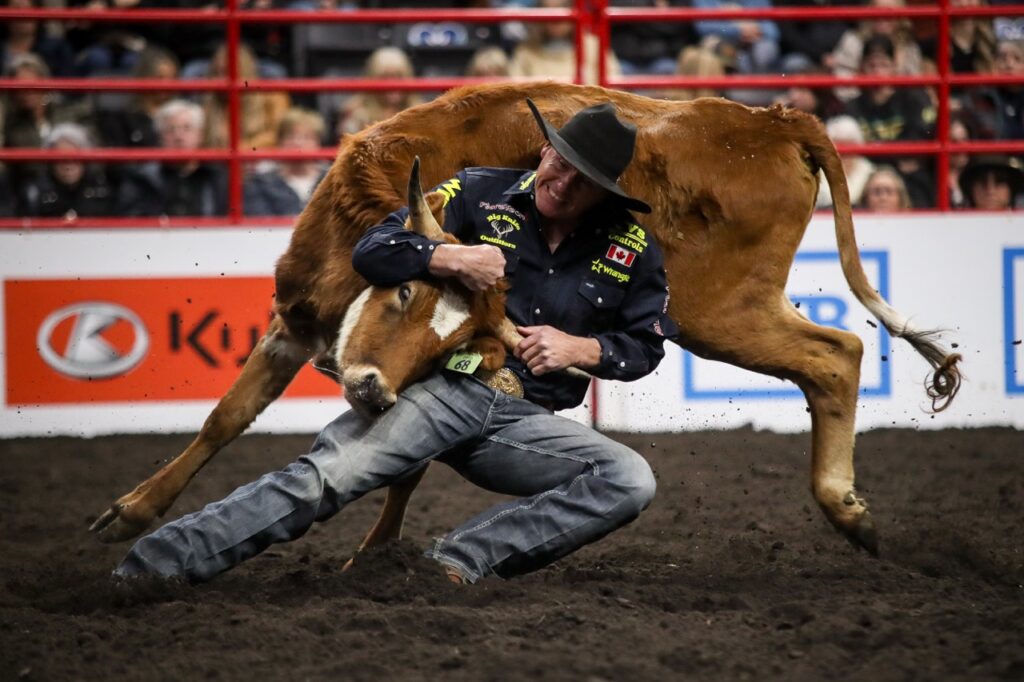
Steer Wrestling

Sponsored by Devereaux Properties/Century 21

The “Bulldogging” Event:
400 Pounds of Momentum

Steer wrestling is the fastest event in rodeo, often decided in under four seconds. It requires a unique combination of brute strength and precision timing. A cowboy (the “bulldogger”) chases a sprinting steer at speeds of up to 40 miles per hour, leans off the side of his galloping horse, and dives onto the steer’s horns. From there, he must use his feet as brakes to slow the animal down before skillfully wrestling it to the ground. It is the only event that requires two riders: the contestant and a “hazer,” whose job is to keep the steer running in a straight line.

What to Watch For
  • The Leap of Faith: Watch the moment the cowboy leaves the saddle. He has to time his jump perfectly so his weight catches the steer’s head without losing his own momentum.
  • The Flat Fall: For the clock to stop, the steer must be on its side with all four legs and its head pointing in the same direction. If the steer is knocked down but rolls over, the cowboy has to let it up and start the wrestling maneuver again.
  • The Teamwork: Pay attention to the rider on the right side of the steer—the Hazer. While he doesn’t get the trophy, a good hazer is the secret weapon that makes a world-record time possible.

Ladies Barrel Racing

Sponsored by: Sponsored by Kipp Scott

Precision at Full Throttle

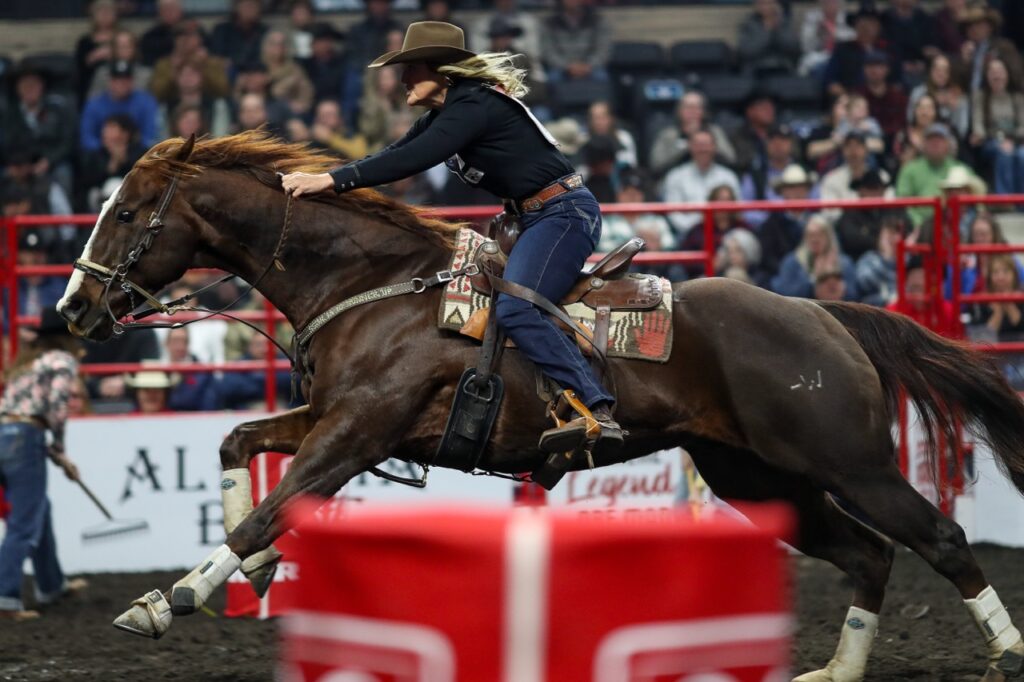
Barrel racing is a heart-pounding race against the clock where millimeters make the difference between a podium finish and a “no time.” In this event, horse and rider charge into the arena at a full gallop to navigate a cloverleaf pattern around three preset barrels. It is a breathtaking display of agility and trust; the rider must “rate” her horse to slow down just enough to hug the turn before exploding into a straightaway sprint to the next barrel. In the Marchant Crane Centrium, the crowd often holds its breath as the pair leans into the final turn, heading for home at top speed.

What to Watch For
  • The Cloverleaf: The rider must circle three barrels in a specific pattern. She can choose to go to either the left or right barrel first, but the remaining turns must complete the cloverleaf. Breaking this pattern results in a disqualification.
  • The 5-Second Penalty: Precision is everything. If a horse or rider tips over a barrel, a five-second penalty is added to their time. In a sport where the winner is often decided by hundredths of a second, knocking a “can” almost always takes a rider out of the money.
  • The Electric Eye: Watch the start line. An invisible laser beam (the “electric eye”) starts the clock the moment the horse’s nose crosses the plane and stops it the instant they return, ensuring the most accurate timing possible for these elite athletes.

Team Roping

Sponsored by: Sponsored by Ing & McKee

The Ultimate Display of Coordination

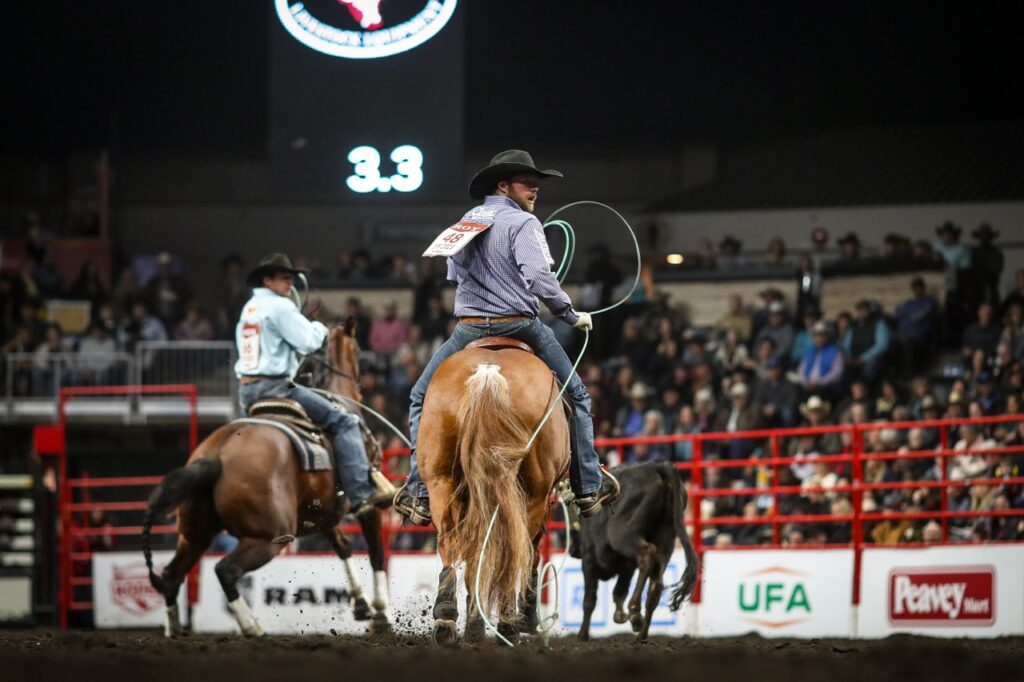
Team roping is the only true team event in pro rodeo, requiring two riders—the Header and the Heeler—to work in perfect synchronization. The clock starts when the steer leaves the chute. The Header must first rope the steer around the horns, neck, or one horn and the nose. Once the catch is made, the Header “turns” the steer to the left, giving the Heeler a clear shot at the hind legs. It is a high-speed game of precision where the slightest mistiming between the two partners can mean the difference between a winning run and an empty pocket.

What to Watch For
  • The “Clean” Catch: The Heeler’s goal is to rope both hind legs. If they only catch one leg, a five-second penalty is added to their time. If they miss the legs entirely, it’s a “no time.”
  • The Dally: Watch the riders’ hands. Once they catch, they must wrap their rope around the saddle horn (called “dallying”) to secure the steer. This is a high-stakes move—doing it wrong can cost a roper a finger in the blink of an eye.
  • The Finish: The run is complete only when the steer is caught, both horses are facing each other, and the ropes are tight with no slack.

Breakaway Roping

Sponsored by Devereaux Properties/Century 21

The Fastest Game in the Arena

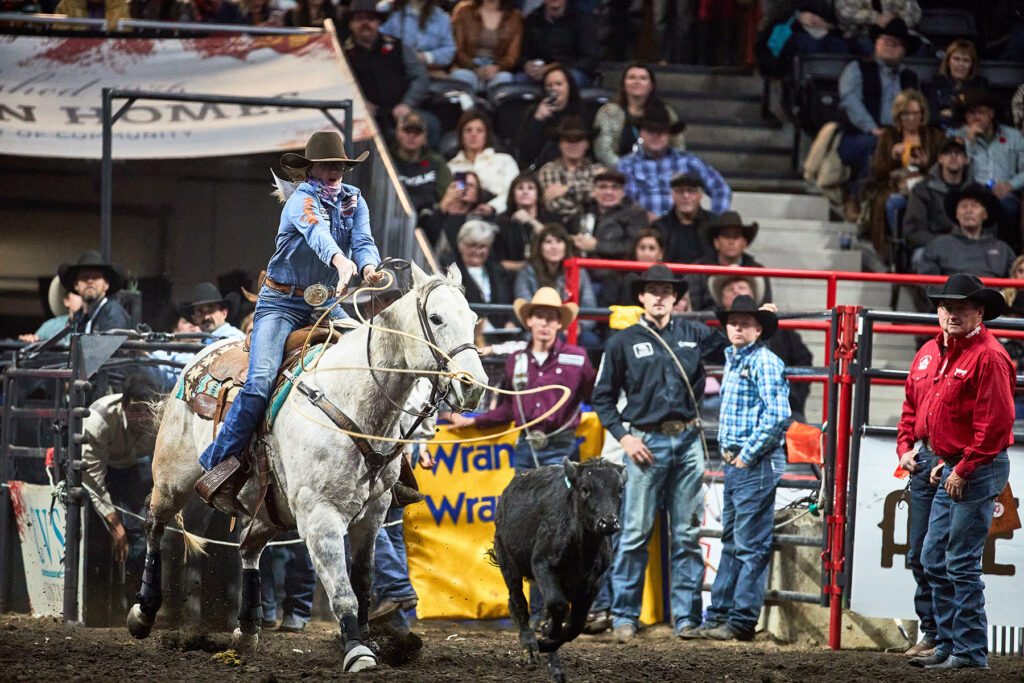
Breakaway roping is a high-octane version of calf roping designed for speed and precision. It is widely considered the fastest event in rodeo, with winning times often clocking in at under 2.5 seconds. The cowgirl starts behind a barrier and, as soon as the calf is released, she must rope it cleanly around the neck. The key difference? The rope is not tied to the saddle horn; instead, it is attached by a piece of light string. The moment the calf hits the end of the rope, the string “breaks away” from the saddle, signalling the end of the run. It’s a split-second test of reaction time that leaves the crowd on the edge of their seats.

What to Watch For
  • The “Snap” of the String: Keep your eyes on the saddle horn. The clock stops the exact moment the string breaks and the rope pulls free from the horse.
  • The Flag: A brightly coloured cloth (usually white) is tied to the end of the rope near the saddle. This makes it easier for the judge to see exactly when the rope breaks away so they can drop the flag to stop the timer.
  • The Bell-Collar Catch: To be a legal catch, the rope must pass over the calf’s head and draw tight around the neck. If the rope catches a leg or the tail, it is a “no time.