What to Expect

The Red Deer Pro Rodeo arrives May 21-23, 2026, bringing three days of genuine competition to Central Alberta. This isn’t theater. Riders come here to test themselves against animals and against each other. The stakes are real, the skill is evident, and the crowd feels it.

You’ll see bronc riding that demands balance and nerve. Bull riding that separates the serious from the casual. Barrel racing where fractions of seconds matter. Roping events where precision and speed combine. Steer wrestling where strength meets timing. Each event tells a story of preparation meeting opportunity.

The grounds sit ready for this. The livestock arrives healthy and strong. The arena is built for competition. The seating gives you sight lines that matter. You won’t miss what happens. Between events, there’s time to move around, grab food, talk with people who understand this world. Families settle in.
Serious fans track times and scores. First-timers discover why rodeo endures in this part of the country.

We’re building something that lasts. This rodeo will run year after year, becoming part of the fabric of Red Deer and Central Alberta. You’re invited to be part of that from the beginning.

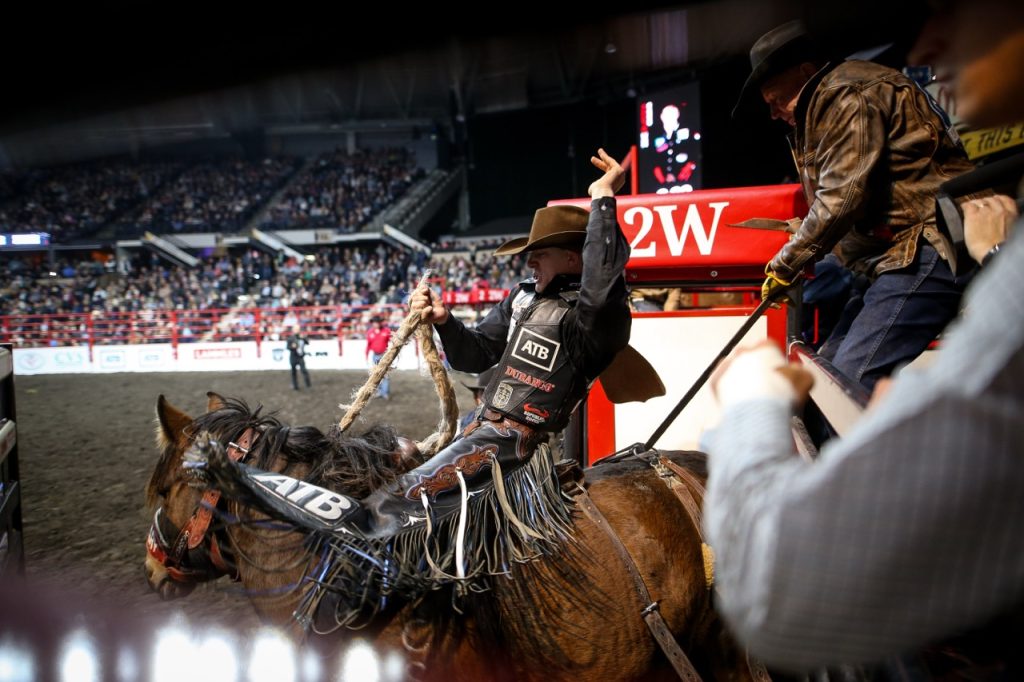
Saddle Bronc

Presented By: Marshall Construction

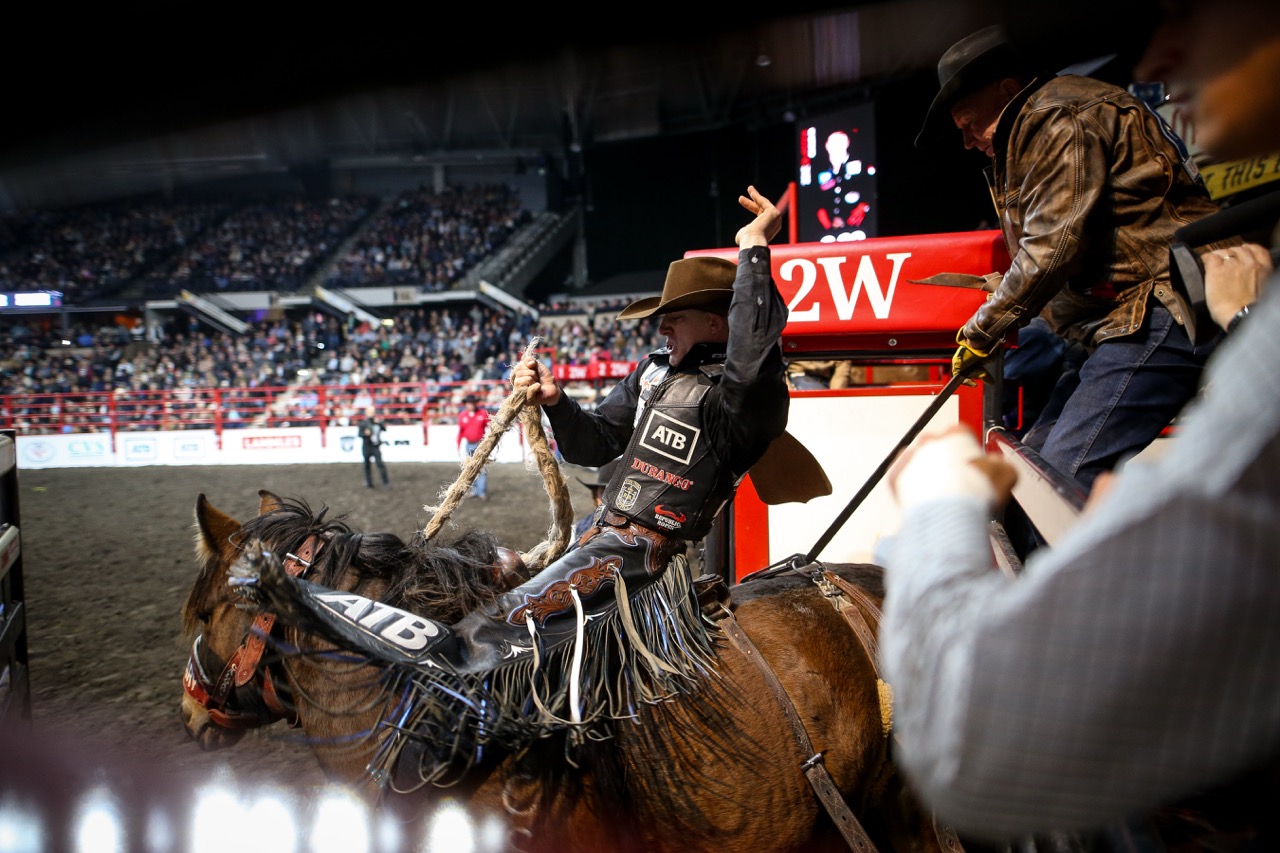
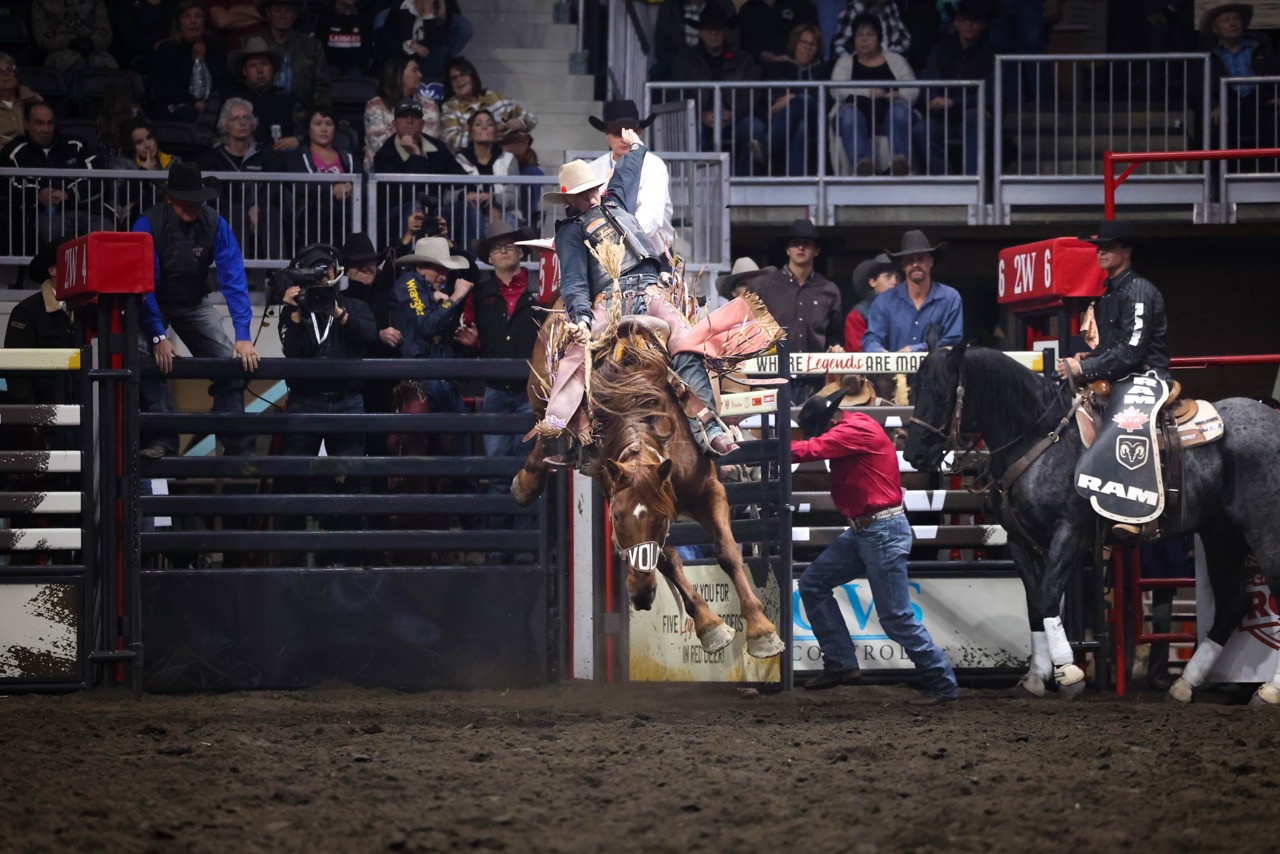
Often called the “Classic Event,” Saddle Bronc riding evolved directly from the ranch work of breaking wild horses. Unlike the raw power of bull riding, this event is a stylized dance of rhythm and balance. To score high, the rider must synchronize his movements with the bucking horse, spurring from the horse’s neck to the back of the saddle in a fluid, continuous motion—all while holding onto a single thick rein. It is an 8-second display of grace under pressure that demands perfect timing and grit.


What to Watch For

  • The Mark Out: The rider’s heels must be touching the animal above the shoulders the instant the gate opens. If he misses the mark, he receives a “no score.”
  • The 50/50 Split: Two judges score the ride. Half the points (50) are for the cowboy’s control and spurring action, and half (50) are for the horse’s power and agility.
  • The Score: A total score in the 80s is excellent; hitting the 90s is legendary.

Ladies Barrel Racing

Presented By: Kipp Scott

Precision at Full Throttle

Barrel racing is a heart-pounding race against the clock where milliseconds make the difference between a podium finish and a “no time.” In this event, horse and rider charge into the arena at a full gallop to navigate a cloverleaf pattern around three preset barrels. It is a breathtaking display of agility and trust; the rider must “rate” her horse to slow down just enough to hug the turn before exploding into a straightaway sprint to the next barrel. In the Marchant Crane Centrium, the crowd often holds its breath as the pair leans into the final turn, heading for home at top speed.

Steer Wrestling

Presented By: Devereaux Properties | Century21

Steer wrestling is one of the fastest events in rodeo, often decided in under four seconds. It requires a unique combination of technique and precision timing. A cowboy (the “bulldogger”) chases a sprinting steer at speeds of up to 40 miles per hour, leans off the side of his galloping horse, and drops down onto the steer’s horns. From there, he must use his feet as brakes to slow the animal down before skillfully wrestling it to the ground. It is one of the only events that requires two riders: the contestant and a mounted “hazer,” whose job is to keep the steer running in a straight line.


What to Watch For

  • The Leap of Faith: Watch the moment the cowboy leaves the saddle. He has to time his jump perfectly so his weight catches the steer’s head without losing his own momentum.
  • The Flat Fall: For the clock to stop, the steer must be on its side with all four legs and its head pointing in the same direction. If the steer is knocked down but rolls over, the cowboy has to let it up and start the wrestling maneuver again.
  • The Teamwork: Pay attention to the rider on the right side of the steer—the Hazer. While he doesn’t get the trophy, a good hazer (and his horse) are the secret weapons that make a world-record time possible.

Tie-Down Roping

Presented By: Tourism Red Deer

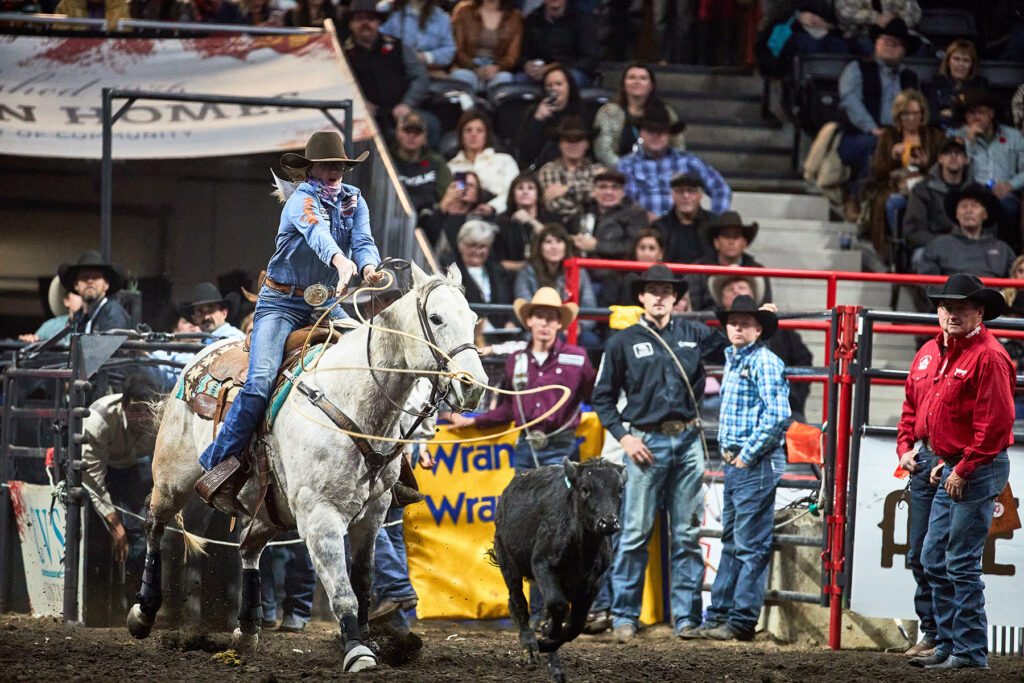
Tie-down roping is the ultimate test of teamwork between a cowboy and his horse. Originating from the essential ranch chore of catching and restraining calves for medical treatment, this event is now a lightning-fast race against the clock. When the gate opens, the horse must explode into the arena to give the cowboy a perfect shot. Once the rope settles, the horse’s job is just beginning—it must stop on a dime and maintain tension on the rope, acting as an anchor while the cowboy sprints to the calf to complete the tie. In the Centrium, this event is won or lost in the fractions of a second.


What to Watch For

  • The “Hooey”: Watch for the final knot. After the cowboy “flanks” the calf (lays it on its side) and wraps the rope around three legs, he finishes with a half-hitch knot known as a hooey.
  • The Six-Second Rule: Once the cowboy signals he is finished by throwing his hands in the air, he remounts his horse and moves forward to create slack in the rope. The calf must stay tied for six seconds—if it kicks free before then, it’s a “no time.”
  • The Barrier: To give the calf a fair head start, the cowboy must wait for it to reach a certain distance before crossing the line. If he “breaks the barrier” by leaving too early, a costly 10-second penalty is added to his time.

Bareback Riding

Presented By: Bettensons Sand and Gravel Co.

Bareback Riding is a high-speed collision. There is no saddle, no rein, and no room for error. The cowboy sits directly on the horse’s back, holding onto a leather “riggin” that resembles a suitcase handle. As the horse explodes out of the chute, the rider’s body is subjected to intense centrifugal force, requiring incredible core strength and specialized technique. To the fans in the Centrium, it’s a blur of flying manes and snapping heels; to the cowboy, it’s eight seconds of hanging on to one of the most powerful athletes in the world.


What to Watch For

  • The “Suitcase” Hold: The rider uses only one hand to stay aboard. Touching the horse, himself, or the equipment with his free hand results in an immediate disqualification.
  • The Spurring Motion: Watch the rider’s legs. They must stay in constant motion, throwing their feet forward toward the horse’s shoulders and snapping them back toward the riggin with every jump.
  • Pure Agility: Because there is no saddle to sit in, the rider must “flow” with the horse’s bucking motion to avoid being bucked off or injured by the sheer whip-lash effect.